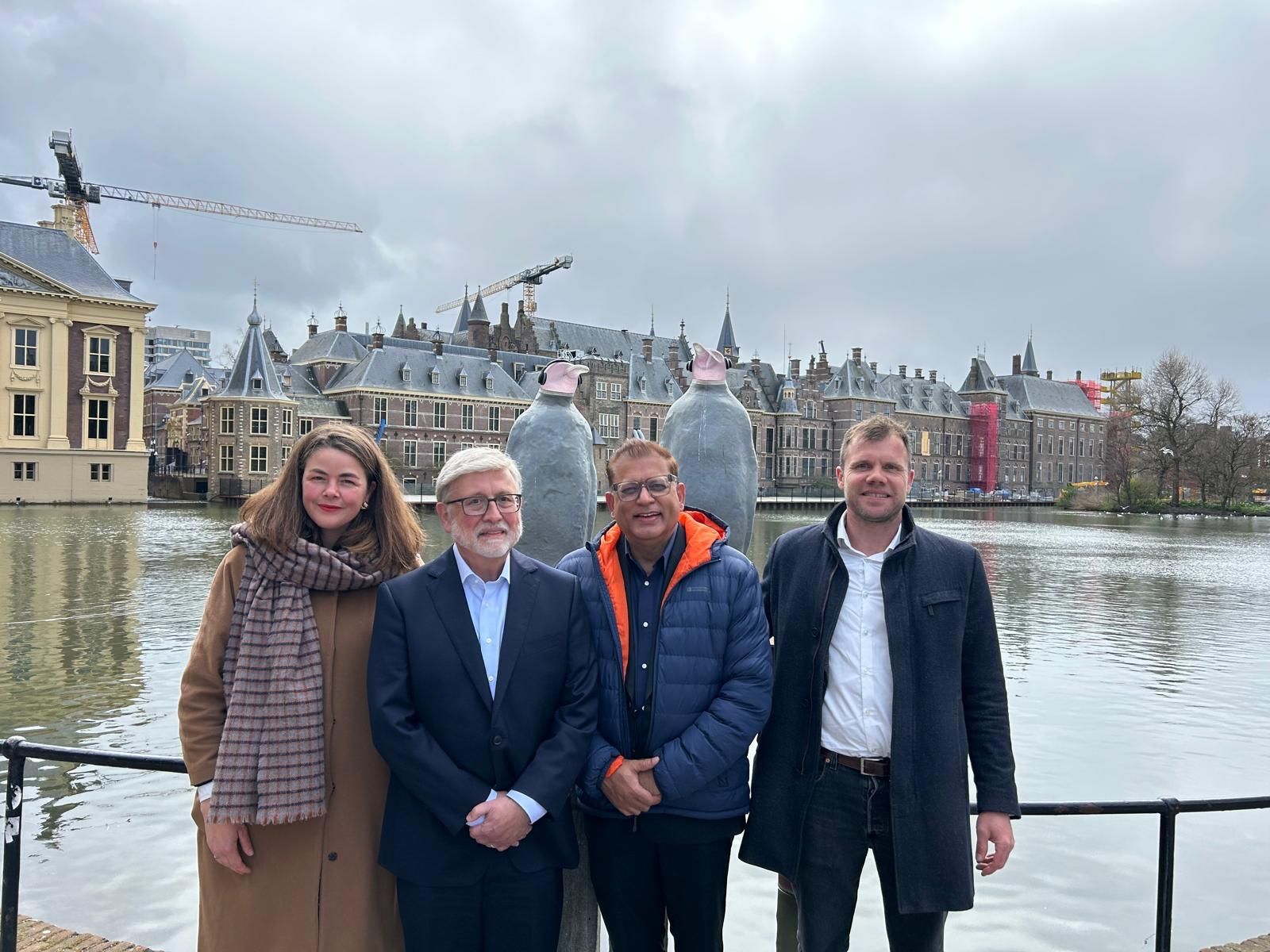
On 2 April 2026, leaders from across government, research, lived experience, and service delivery convened in The Hague for a focused roundtable on the future of digital mental health systems. Hosted in collaboration with the Netherlands Ministry of Health, Welfare and Sport, the session brought together international expertise to explore how data-driven, digital-first models can strengthen access, efficiency, and outcomes across mental health care.
The roundtable built on momentum from the eMental Health International Collaborative (eMHIC) Congress 2025 in Toronto, where representatives from 24 countries identified shared priorities for sustainable system improvement. These included consistent digital triage, evidence-based treatment pathways, and aligned standards for outcome measurement and data governance. With waiting times continuing to rise and treatment capacity under strain, the discussion focused on how systems can move beyond strategy into coordinated, scalable action.
The Oranje Draad Taskforce: A Collaborative Movement
A key focus was the emergence of the Oranje Draad Taskforce, a cross-sector initiative within the Dutch mental health field. Bringing together insurers, policymakers, clinicians, and lived experience leaders, the Taskforce represents a coordinated movement toward digital-first access and learning health systems.
Its strength lies in its collaborative structure, where stakeholders work collectively to develop and apply shared approaches to care delivery, data use, and system design. This reflects a broader shift toward integrated, continuously improving systems that are responsive to both clinical evidence and real-world needs.
Lived Experience and Global Knowledge Exchange
Lived experience was a central and grounding theme throughout the roundtable. A recent research report led by Juliët Holtschlag at MIND Netherlands highlighted that digital tools are most effective when positioned as a complement to, rather than a replacement for, face-to-face care, and when tailored to individual needs.
During the visit, eMHIC formally presented three major knowledge resources to the Ministry: Beyond Borders: Connecting Global Digital Mental Health Systems, the eMHIC25 Congress Report, and Interconnected, the world’s first magazine dedicated to digital mental health. These resources bring together international insights, practical exemplars, and emerging best practices, supporting countries in translating global knowledge into local implementation.
The discussion was enriched by contributions from an international group of experts, including Professor David Clark (UK) and Charles Curie (USA), alongside representatives from the Ministry, health insurers, and innovation partners. Together, these perspectives underscored both the urgency of addressing rising demand and system inefficiencies, and the opportunity to leverage data, technology, and collaboration to create more responsive and equitable mental health systems.
The Hague Roundtable reflects a broader shift in digital mental health from exploration to implementation. As countries align around shared principles and begin to operationalise data-driven models, international collaboration remains essential in shaping approaches that are both effective and grounded in lived experience.