The power of technology in reconnecting us with community
Posted
“I think that a lot of the solutions for mental health will come from the south”
– Tom Osborn – founder of Shamiri in Kenya
A mirror of our collective state
Society’s state is reflected through mental health, and its symptoms are ever more visible through a variety of aspects. The loneliness pandemic, rise in polarization, increase in mental health challenges among youth, the attraction towards AI driven generic and adapted services, video and text therapy, exponential rise in online searches for self-help and “life changing” hacks. All strongly signaling the state of our collective experience on this planet.
Combined, these mask an iceberg of underlying root causes visible to those of us working in the field; the deterioration of communities, resulting in loss of human connection and purpose, fueled by urbanization, hyperindividualisation, polarization, digitization, social media and capitalism. Leaving us with little to no meaningful human interaction, even though many of us live among more people than ever in history, creating the paradox of our time.
This is summarized in the global mental health numbers where we estimate that 1 out of 7 is struggling with their mental health at any given time. Depression and anxiety has reached the 300 million club, and suicide is the second-leading cause of death among young adults (15-29) according to the WHO.
A number, only faith kept me out of, when I was consumed by the feeling that the world did not see me nor have space for me in the little village where I was a lost thirteen year old. This occurred before social media even entered the main stage, and I can barely imagine how that would have been now. The biggest danger of little to no meaningful human interaction with strangers and loved ones, so dominating for my existence in my teens, is that the mirroring our self-worth needs to evolve a safe ground to develop our identity from, never roots.
“I want people to know that pain is inevitable, but so is healing, and this is an entry point towards healing.”
Dixon Chibanda – founder of Friendship Bench in Zimbabwe
A faltering sense of community is no longer a regional problem of some megacities or countries, it’s now a rising trend across the world, especially in the urban areas. When this seems to be driving the societal symptoms, what better way to look for perspectives and solutions than community based countries in the south? Where community is still stronger, so that they can feel it fracturing, and where we can find true inspiration of the power of community, and it brings us back to connection and purpose through each other. To help us lead the way for society at large through the mental health and the digital mental health sector, starting from the south.
The Human Aspect turns 10
This year, my social entrepreneurial journey with The Human Aspect in the mental health space turns 10 years, and as a result I spent the start of the year evaluating our vision. To see if it still held power to move and motivate us as a team. “Redefining mental health globally” it read, and it was based on that 10 years ago when you said the words “mental health” in most places, it would be associated with the stigmatized side. Challenges, shame, diagnosis, institutions, and things we keep to ourselves.
Today I would argue that mental health has in many ways been redefined, don’t get me wrong, we are not there yet and stigmatization is still high in many places where awareness is still key. At the same time mental health now holds space for both the “shadow side” and how to approach it, like awareness campaigns, experience based knowledge, user stories, but also company wellbeing, and preventive measures like our “Life Mastery programs” in schools.
It is now on top of many local and national governments agenda, and risingly so, especially after the pandemic. That combined with the power digital technology can have – if we combine it with the essence of community, is what makes me optimistic and excited about this bleak picture. Because as we quickly learn in psychology, symptoms are just signals of what needs to be addressed to start our healing journey and make space for growth. Now it’s time to address it and start the journey.
“Think about making mental health, especially therapy, move away from this isolating, lonely, one-on-one experience to a more social rejuvenating and revitalizing experience”
-Tom
Rethinking what mental health really is
Therapy and mental health today is often seen through the psychological or psychiatric lens, as an illness living inside of us as individuals. Creating a foundation of which two major directions spring out of:
One, the medical model providing us with treatment through medication consumed by the individual, approaching us as the container of our struggles. A perfect starting point to build a business fueled by medication, a hierarchical power structure of help and receiver of care, where the top of the pyramid is an institution revoking your rights by law in the name of care.
Two, the therapeutic model, providing us with a path towards healing mainly through one-to-one therapy, where a vast sea of “evidence based” methods and directions compete in the race of my healing as an individual.
“Mental health was ”introduced” to Kenya as part of the colonial enterprise. They give people labels, labels that are foreign to them. The consequences of this is that you are taken to an asylum, where your civil liberties are revoked. It actually makes sense that when you are thinking about mental health from that perspective, it is stigmatized.”
– Tom
But is mental health existing inside of us or between us in our relationships and communities? And can redefining our perspective on psychology help us move beyond stigmatization?
How we moved from soul to system
The original definition of psychology comes from the Greek word psyche meaning soul, spirit, or breath, defining psychology as “the study of the soul”. Soul being a word that to the Greeks contained community and universal connection, closer linked to philosophy and the Eastern traditions of “deep soul work”, than somatic medicine.
This perspective shifted in the 18th century pushed by European stakeholders to pull it closer to medicine and “the study of the mind”. Where the word “mind” was limited to the physical brain, leading to the introduction of psychosurgical procedures like “lobotomy”, “shock therapy”, and other methods of “healing” the mind through physical actions aimed towards the brain. Laying out the starting point of today’s perspective on mental health across Europe, and the United States, Canada, New Zealand and Australia, but also exported through the colonial project in community based countries like the Philippines, India, Iraq, Colombia, Kenya, Nigeria, Zimbabwe, South Africa and beyond.
Attempts to bring us back to our roots
A development often challenged from within, like during the transformative era led by Italian psychiatrist Franco Basaglia, focusing on deinstitutionalization which saw mental health hospitals being abolished in 1978 in Italy, but that movement and resistance was blocked. Similar movements were seen in Latin and South America through the likes of the psychiatrist and psychoanalyst Alberto Fergusson in Colombia. He founded the Institute of Accompanied Auto-analysis or “Accompanied Self-Rehabilitation, in 1982.
Moving away from the institutionalization and medicational approach for people diagnosed with severe mental health conditions like schizophrenia. To a methodology that emphasized the power of community, through an empathic, supportive relationship between the people receiving care and those providing it, that enabled people to become experts on their own minds to have ownership in restructuring their lives in the community. So the medicalized movement was not lacking in resistance, but it was forced through with the same brute force as the colonial era of the last centuries.
“The first building block is expressed empathy, the ability to make people feel respected and understood, and bring all of that in the present moment. Anchor your expressed empathy in the now. Because it’s only ‘the now’ that we really have.”
Dixon
A memory we’ve always known
The original definition of psychology resonates much better across time, from powerful civilisations in the African continent, Asia, and South America to the indigenous and first nation perspectives across the world. Civilisations that all have traces of a community-based notion of soul health, societies that saw humans as a component of a connected larger whole, not as mere individuals living in isolation. Often referred to in the older texts and imprints from the past, as how we processed and faced natural disasters, illness, grief, faith, and experiences of “another world”. All concepts seen and expressed through the lens of community. Something impacting beyond the body through the connection of souls in interaction as relationships in families, communities and societies. Not just with humans, but also with animals, nature and the universe. Especially in descriptions of solutions and ways of facing such challenges and experiences, solutions often derived from nature, as natural and ancient medicine, but also from the community for social concepts like care, love and support.
A perspective that resonates with my lived experience journey, where my healing came from within the community, but also from the journey of the last decade, leading The Human Aspect from idea to global movement through community. Emphasized during our first interview tour to the African continent where we visited Freetown, and joined Hassan the founder of Social Workers Sierra Leone in their community work for people living in the streets due to their mental health. A country carrying the trauma of colonization deeper than many, where community has been their only form of care. Seeing how the social workers and volunteers created a community around the people, where you could observe healing through every smile, handshake and conversation. Witnessing how dignity was restored in the eyes of those many of us walk past on the streets living our busy lives in the modern hamster wheel of society.
Social workers Sierra Leone
Gifts from the south (showing us a way forward)
Over the years I have had the privilege of meeting founders from the south that have started incredible initiatives that have combined community and technology to create innovation.
MentallyAware Nigeria (MANI)
MentallyAware Nigeria (MANI) was started by medical doctor Victor Ugo in 2015/16, after his journey through depression to fight stigma, raise awareness, and provide crisis support. They are on a mission to create a world where young people in Nigeria can flourish because their mental health is valued by themselves and their community; including having access to high quality rights based services as needed and are able to live to their full potential. MANI is Nigeria’s largest youth-run and youth-focused mental health organisation. They leverage social media to reach youth where they are, and provide an environment that makes it possible for people to seek care without fear of discrimination. MANI is also the largest provider of crisis support services in Nigeria, with direct support given to over 200.000 people where 80% are between the ages of 10 and 25.
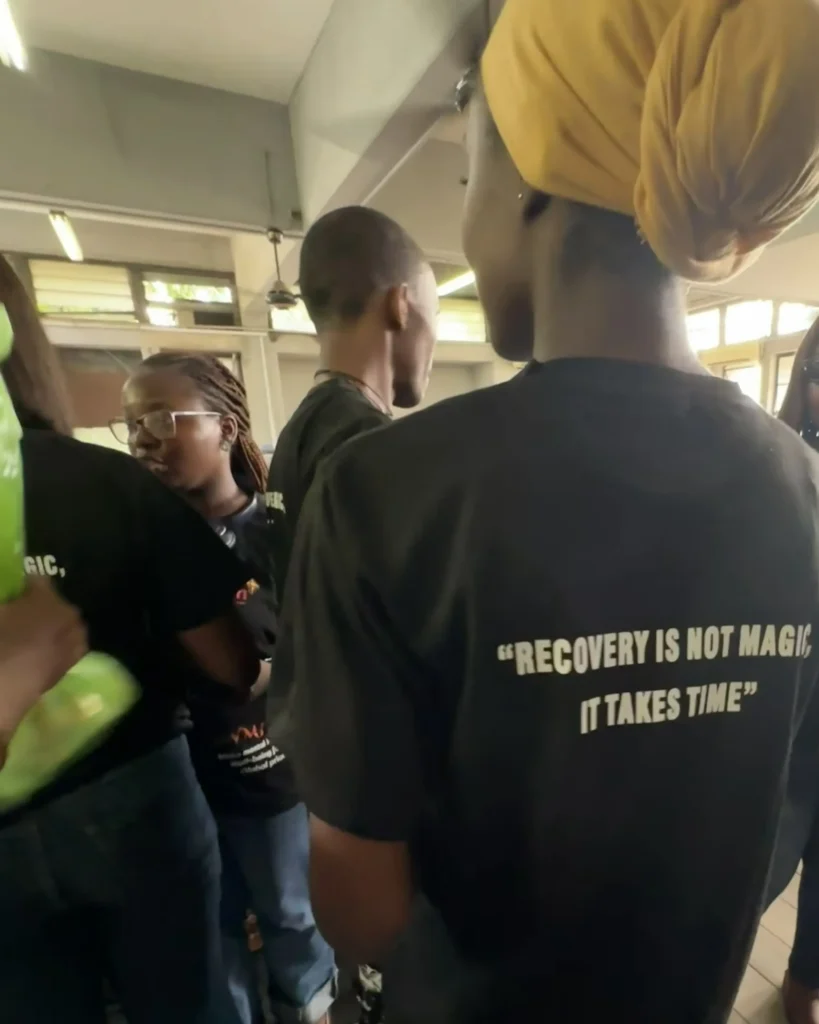
MANI – Nigeria school awareness visitsMANI – Nigeria school awareness visits
The South African Depression and Anxiety Group (SADAG)
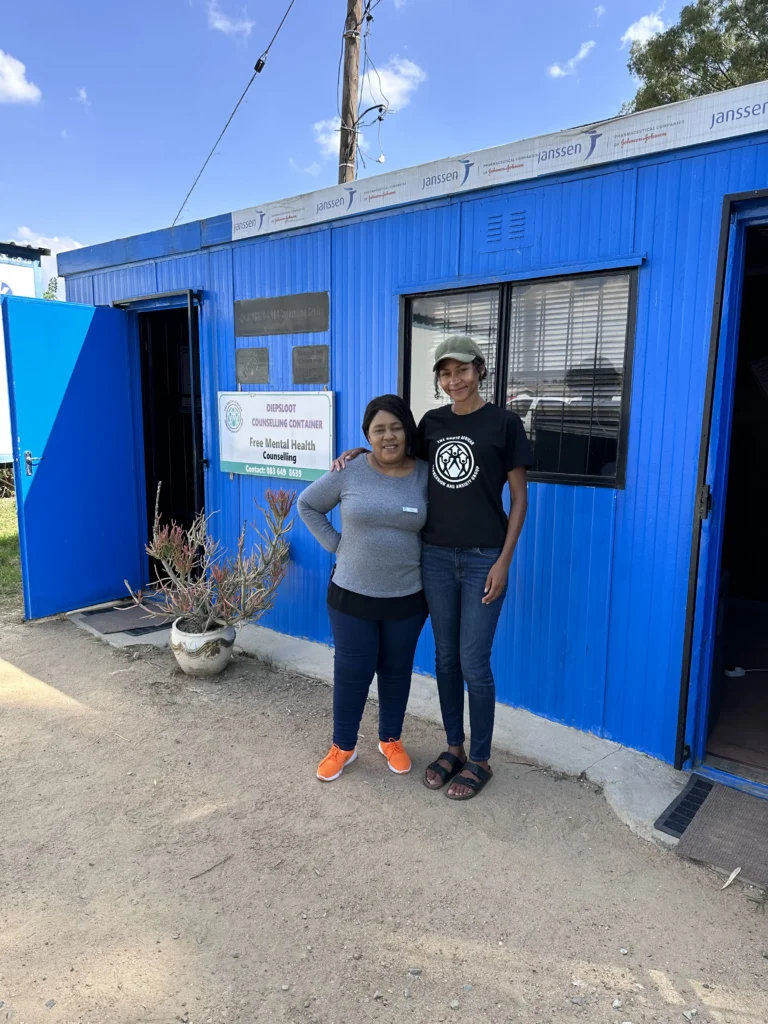
The South African Depression and Anxiety Group (SADAG) was started by Zane Wilson, after her journey through panic disorder and starting her journey of healing at the tail end of the colonial tyranny of Apartheid in 1994. Over the last 30 years she has led the organization from a awareness initiative to becoming Africa’s largest mental health support network, providing support for depression, anxiety, and suicide prevention nationally. Built on a combination of community and teletechnology, SADAG operates 15 national helplines, managed by over 300 counselors offering not just tele-support, but also digital lived experience through our Life Experience Library. They manage 170+ self-organized support groups across the communities and SADAG trains group leaders and offers professional support to ensure operations across South Africa both physically and digitally. In addition to the community based counseling containers with community support, they manage in extra socio-economically challenged areas.
SADAG – community counselling container
Friendship Bench (Zimbabwe)
Friendship Bench in Zimbabwe, started by the psychiatrist Dixon in 2006, after he lost a client to suicide because they could not afford the bus fare to reach him for care. Leading him to train 14 volunteer community grandmothers “Gogos” in Mbare, Harare, to deliver basic cognitive-behavioral therapy (CBT) in the communities on wooden benches. Today they are on a mission to have a “Friendship Bench” within walking distance-everywhere’”. Friendship Bench is now globally established in The US, and 10 other countries leading the way from the south within global mental health. They have trained more than 3.000 community workers and seen more than 850.000 clients with 900+ active self-organized support groups spread across the communities. They utilize whatsapp technology and digital lived experience resources from our library in their digital approach. They were recently awarded a large grant from Wellcome, allowing them to lean in on digitizing their community method across Africa and the world in the coming years.
Friendship bench check in circle – community youth
Shamiri Health (Kenya)
Shamiri Health in Kenya, started by Tom together with Katherine Venturo-Conerly in 2018-19 at Harvard University, as a part of the Lab for Youth Mental Health. Tom wanted to address the intense academic pressure and socioeconomic challenges that he saw in his peers. As Tom grew up in rural Kenya, he felt such challenges were often labeled as “life” and something youth just needed to endure, but he saw how it often evolved into unaddressed psychological struggles. Today they are on a mission to bridge the gap of accessibility and affordability in mental health care in Africa. They have provided care to over 4.000 youths utilizing their app “Rafi” and digital outreach to youth connecting them both with physical and digital therapy. Including integrating digital lived experience stories filmed by us in Kenya in 2024 to share the power of lived experience.
Tom named the organization Shamiri meaning “thrive”, where their mission sees mental health through the lens of community. Very much similar to MANI, SADAG, Friendship Bench, and many other great initiatives, and deeply connected to the needs of the global society.
Friendship Bench empowered “Gogo’s” Grandmothers and youth to engage as the providers of care and therapy inside the community, imagine doing the same with the growing number of people living as work incapacitated, as my mother has done since my teens. How she could have felt a deeper sense of belonging after her primary responsibilities dropped when we kids moved out, and she was left to a more solitude life. A life that would have been rich in a community based country, but in Norway she is left to loneliness unless she actively participates herself. Not able to do traditional work, but very much an untapped resource for her community. How we could systemise how we engage others outside of work, retirees and lost youth in our societies to empower them and provide them with a purpose. Inspired by Shamiri and MANI that engages youth in meaningful community work. Because if it’s one thing these four have succeeded with, that I can attest to through the hundreds that has engaged through our work, it’s that the universal need of feeling worthy, valuable, experiencing mastery and being part of a community is the strongest healing power known to us, attested through ancient history until now.
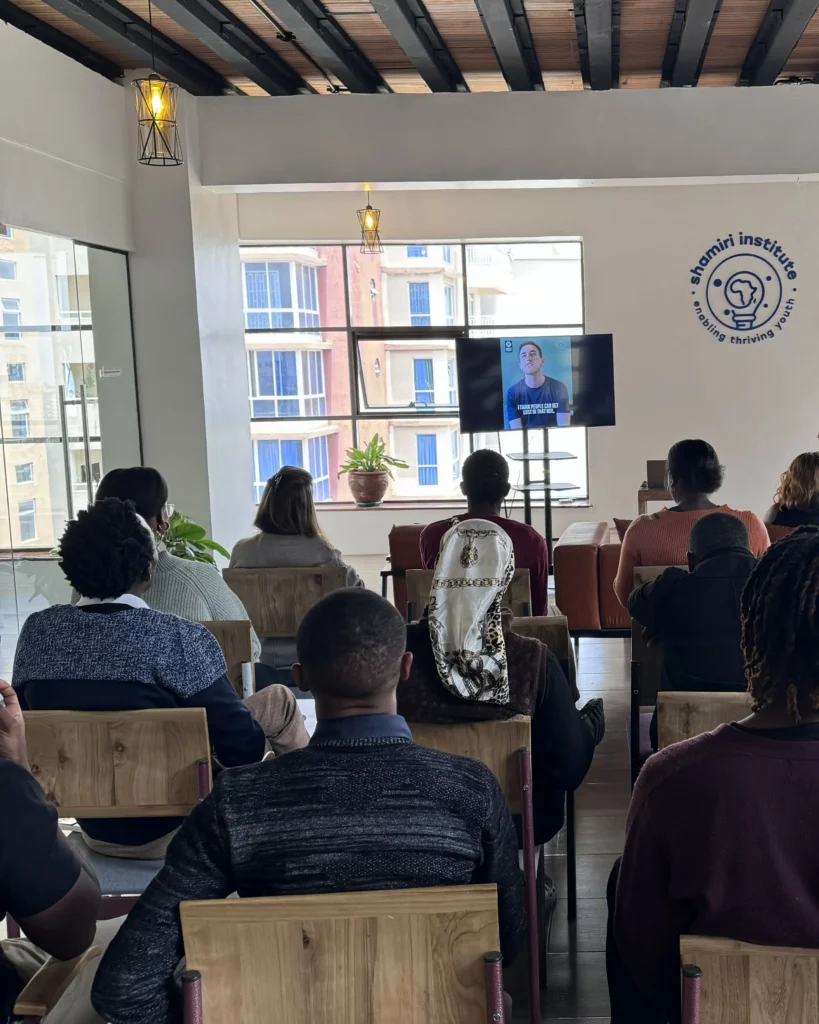
Shamiri office – group workshop
Coming back to each other
These organizations are only the peak of the iceberg of pioneering leaders in the crossroads between community and technology within mental health and beyond. All working to build a world where youth, adults and elderly can connect and thrive together in their community, by creating new mental health care solutions and community spaces that are rooted in a social rejuvenating and revitalizing experience.
In a world where humans grow further apart, disconnected and distracted into an ever growing experience of polarization and loneliness, where symptoms of depression and anxiety are rising among us, can bringing community back help us and them to connect? Beyond our labels, narratives and differences, connecting us all through community and our shared human aspect.
If you are interested in learning more about these initiatives, reach out to:
Jimmy Westerheim is a public speaker and Founder and CEO of The Human Aspect. The Human Aspect empowers global mental health by sharing personal stories, amplifying underrepresented voices, and redefining the approach to mental well-being.