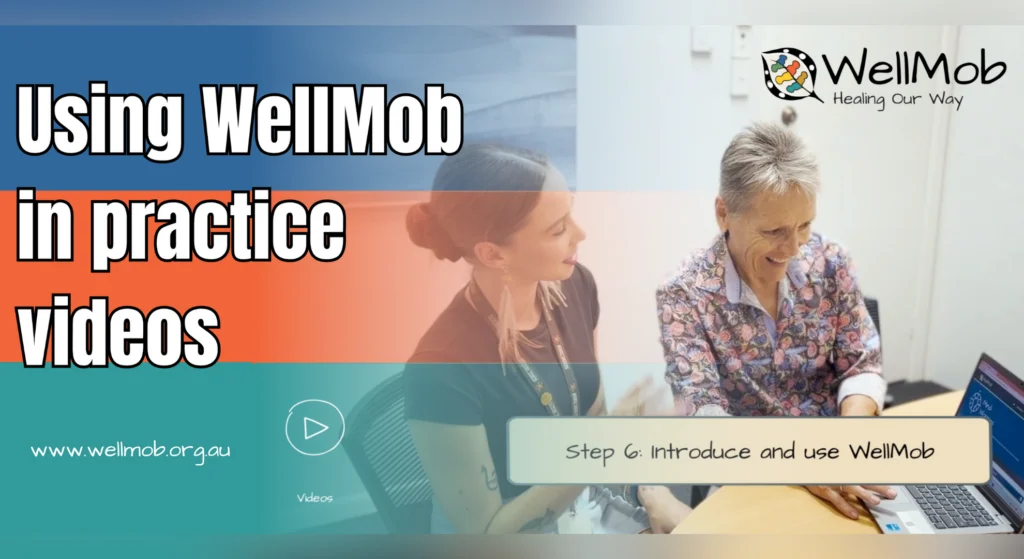
In the evolving landscape of digital mental health (dMH), culturally responsive platforms are essential to ensure equitable access and meaningful engagement. The WellMob website stands as a pioneering platform in this space.
Developed under the e-Mental Health in Practice (eMHPrac) consortium and hosted by the Australian Indigenous HealthInfoNet, it was co-designed with Aboriginal frontline mental health workforce as a portal of online Social and Emotional Wellbeing (SEWB) resources. Since its launch in 2020 during the COVID pandemic, WellMob has grown into a trusted and widely used tool for both health professionals and community members.
The point of difference is that the WellMob website curates content beyond typical mental health resources. It includes apps, videos, podcasts and websites that capture holistic health content that is strengths based and culturally embedded to appeal to Australia’s diverse First Nations populations.
Evolution and Pilot Initiatives
Launched in mid-2020 with 120 curated resources, WellMob has expanded to host over 500 culturally appropriate SEWB resources by 2025. This growth reflects the platform’s commitment to continuous development and responsiveness to community needs.
Recent initiatives include:
- Training and education content for health workforces to improve uptake of digital interventions
- Resource Sheets for Workers, offering curated shortcuts to top resources across 20 wellbeing and workforce education topics
- Webinars, podcasts, and conference presentations to build practitioner capacity and awareness.
WellMob collaborates with government funded workforce development providers such as NSW Health’s Agency of Clinical Innovation and Mental Health Online Professional Development (MHPOD) as well as mainstream mental health service providers such headspace, SANE, Beyond Blue, MindSpot, THIS WAY UP and Mental Health Online. The WellMob team have contributed to workforce development content in providing culturally safe and embedded care and support for their First Nations clients.
In addition to working alongside key Aboriginal and Torres Strait Islander health workforce organisations and peak bodies, WellMob contribute mental health workforce development content of the Black Dog Institute and Emerging Minds. The WellMob project continues to help shape future directions in mental health service delivery, so it is responsive and culturally suitable to First Nations people’s wellbeing needs.
These efforts have positioned WellMob not only as a digital library, but also as a key workforce development entity as part of eMHPrac, enhancing practitioner confidence and cultural competency in working with Australia’s First Nations peoples.

Challenges and lessons learned
Over the past two years, the WellMob team has navigated several challenges:
1. Workforce Capacity
With most team members working part-time, maintaining momentum and scaling initiatives has required strategic prioritization and strong collaboration.
2. Funding Uncertainty
Although the project has received recurrent funding from the Australian Government’s Department of Health, Disability and Aged Care under the e-Mental Health in Practice consortium since 2013, annual contract renewal maintains ongoing uncertainty and restricts proactive planning and advocacy.
3. Digital literacy and engagement
Ensuring that both First Nations clients and non-Indigenous practitioners can confidently use digital SEWB tools has required ongoing training and tailored content development. This is difficult to service under restricted funding. In addition, the escalating advancements in generative AI provide untapped opportunities to deliver content to these diverse audiences.
Key Lessons Learned
Co-design is critical: Engaging frontline Aboriginal health workers in development ensures relevance and cultural safety.
Flexibility in delivery: Offering diverse formats (e.g. podcasts, videos, webinars, printable sheets) meets varied user needs.
Partnerships amplify impact: Collaborations with research centres and health organisations have enriched content and extended reach.
Insights and Transferable Learnings
WellMob offers several insights for international digital mental health initiatives:
1. Cultural safety drives engagement
Over 80% of surveyed users (2024) rated the website as culturally safe, easy to use, and applicable to practice. This underscores the importance of culturally grounded design in digital health platforms.
2. Community and practitioner dual focus
By serving both health professionals and First Nations community members, WellMob bridges the gap between service delivery and self-help, enhancing prevention and early intervention.
3. Scalable resource curation
The model of curated, topic-based resource sheets for workers can be adapted to provide other online health knowledge translation and health literacy objectives, offering a scalable approach to digital content delivery.
4. Embedded workforce development
Integrating training and professional development into the platform ensures sustained use and builds practitioner confidence in using culturally embedded wellbeing resources.
Impact and User Feedback
WellMob’s growth has been substantial:
- Website sessions increased from 24,000 in 2021 to 300,000 annually in 2024
- 41% increase in average daily users in 2024.
Website user surveys (Australian Indigenous HealthInfoNet, 2022; University of Sydney 2024) conducted highlight a high level of satisfaction, usability and confidence in its cultural authenticity. Both surveys that targeted health workforce demonstrated:
- 80-95% found the website culturally safe
- High ratings for usability and relevance to health practice.
Testimonials
“WellMob has become my go-to for culturally safe resources. It’s helped me connect better with my clients.” — Aboriginal Health Worker
“The training sheets are a game changer. They save time and improve the quality of care.” — Mental Health Clinician
Future Plans
Looking ahead, the WellMob project will focus on keeping website content up to date and relevant, while also strengthening workforce capability in using online resources to improve health literacy and treatment outcomes for First Nations clients. Key directions going forward include:
- Expand workforce development content in the use of digital tools with First Nations clients, focusing on prevention, early intervention and holistic SEWB models of care
- Support practitioner training in understanding and adapting practice to new technologies including safe and ethical use of AI agents for both non-clinical and clinical purposes
- Secure long-term funding through Australian Federal Government
- Strengthen partnerships with national peak body health and research organisations to embed SEWB approaches to First Nations services and care
- Explore new technologies such as generative AI to streamline professional development searching for time poor practitioners and quickly short-list online resources for their clients to use in-session.
Conclusion
The WellMob website exemplifies how culturally responsive digital platforms can transform mental health care for Indigenous communities. Its success offers valuable lessons for global digital mental health initiatives seeking to improve equity, engagement and consumer outcomes.
As the project prepares for its next phase, continued investment and collaboration will be key to sustaining and scaling its impact to provide better health service delivery and patient outcomes for Australian Aboriginal and Torres Strait Islander populations.