Share this initiative
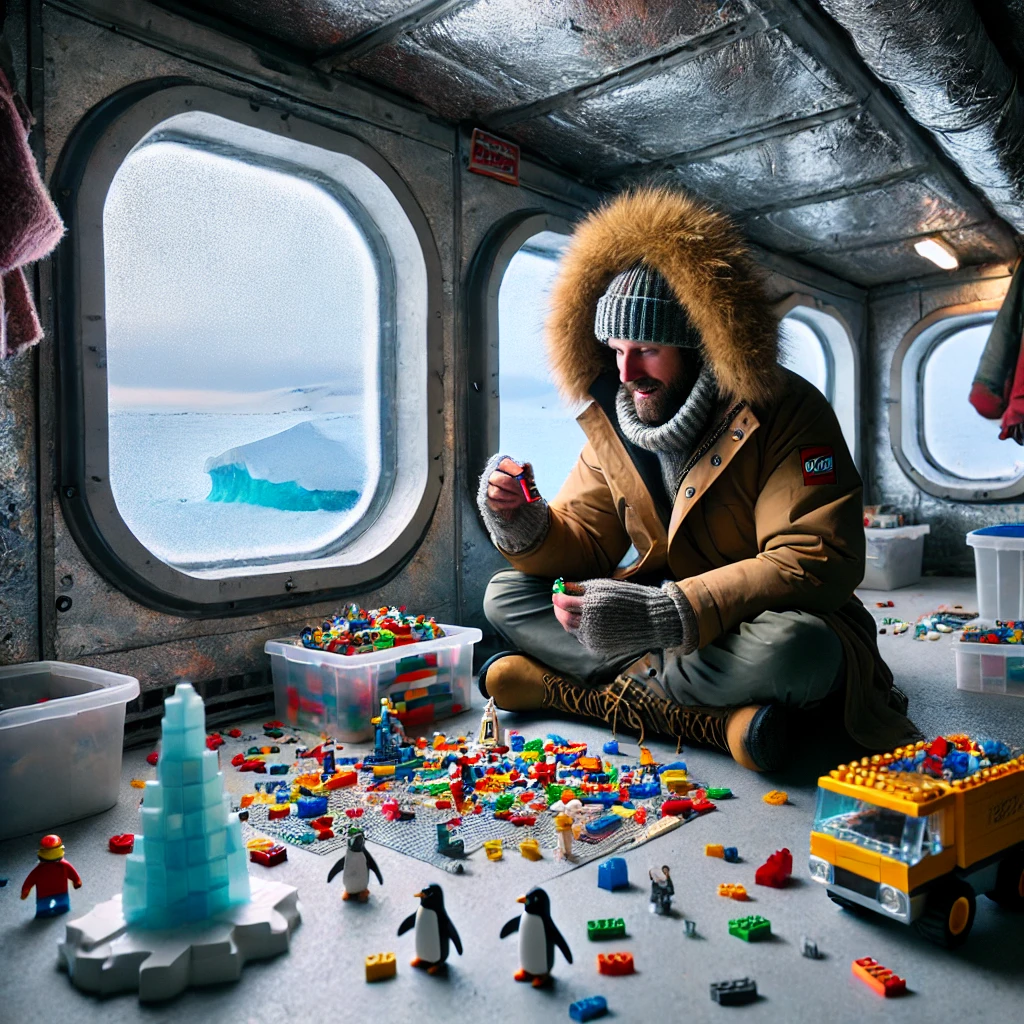
The program is being tested with Antarctic crews through pre-departure training and in-mission booster sessions, with longitudinal quantitative measures and post-mission interviews.
Personnel spending winter-over periods in isolated and confined Antarctic stations.
Individuals in environments simulating long-duration space mission conditions.

Now accepting submissions of interest for the upcoming issue.
Interconnected is the world’s only digital mental health magazine.
Want to be featured?
Email [email protected]
Antarctic winter-over crews face prolonged isolation, confinement, sensory monotony, interpersonal strain, disrupted routines, and limited access to psychological support. Although these conditions resemble key challenges of long-duration space missions, scalable and low-burden mental health interventions remain limited. Existing approaches often require substantial time, specialist delivery, or are not tailored to the operational constraints of extreme environments.
MINDFUL-ICE II addresses the need for a brief, feasible, and scientifically grounded program to support stress regulation, emotional flexibility, and psychological adaptation during missions.
MINDFUL-ICE II builds on previous research conducted with Antarctic crews and is part of a broader research line on psychological adaptation in isolated, confined, and extreme environments.
The project has strong translational relevance for space psychology, astronaut support, and other high-risk operational contexts. Its low-cost and scalable format makes it suitable for deployment in settings where access to continuous psychological care is limited, while still allowing rigorous scientific evaluation.
MINDFUL-ICE II is a tailored mindfulness-based program designed for Antarctic winter-over crews. It combines brief pre-departure online training with in-mission booster sessions and simple experiential practices, including guided exercises and creative activities such as mandala colouring.
The program is designed to fit demanding operational schedules while promoting awareness, cognitive flexibility, stress regulation, and adaptive coping. Its impact is evaluated through longitudinal psychological measures and post-mission qualitative interviews, generating evidence relevant to both polar missions and future long-duration space exploration.
Designed to fit the limited time and demanding routines of Antarctic crews.
Addresses isolation, confinement, monotony, stress, and interpersonal challenges.
Provides participants with practical skills before entering the mission environment.
Reinforces practice through periodic sessions during the winter-over period.
Includes guided mindfulness practices and accessible activities such as mandala colouring.
Uses longitudinal questionnaires and qualitative interviews to assess feasibility and impact.

Three ways to get involved:
Choose the level that fits.