Digital Mental Health Programme - Digital Inclusion

Share this initiative
Key Details

Organisation Name

Scottish Government

Location

Edinburgh, Scotland, UK
Scotland, UK

eMHIC Member Status

Strategic Partner

At a Glance

Description

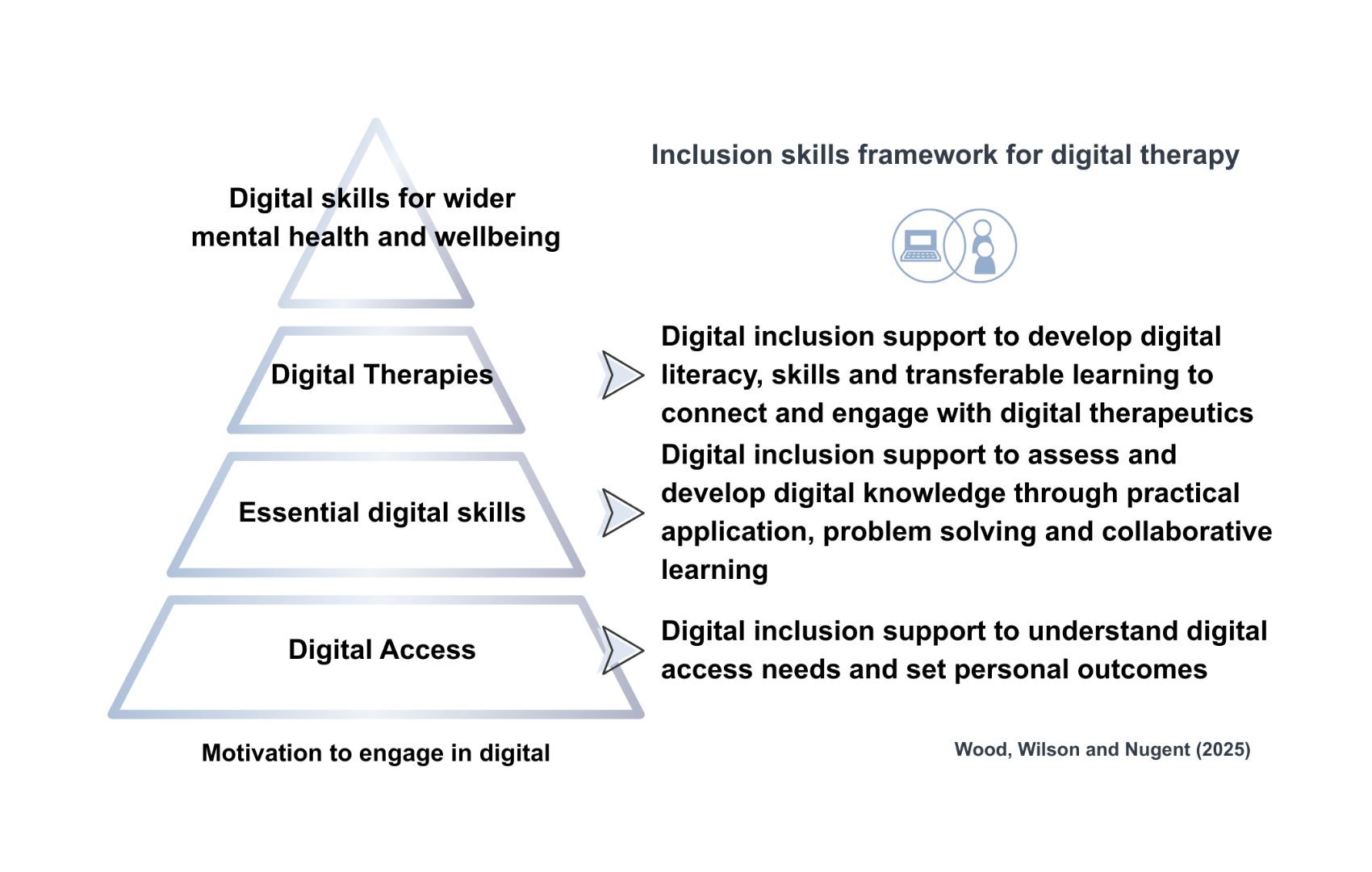
Building a digital inclusion functional capability as a core part of the Digital Mental Health delivery that will consolidate the evidence and tools to support mental health services to develop approaches to respond to digital inclusion as part of digital therapies.

Implementation Status

Scaling implementation

Utilising existing infrastructure in digital therapies to build a scalable digital inclusion model and adapting digital champions training to support referrers and digital therapies teams as part of embedding and implementation.

Target Population

People accessing mental health support

People impacted by digital exclusion

Health and care workforce

Referrers to digital therapies

Interconnected Magazine

Now accepting submissions of interest for the upcoming issue.

Interconnected is the world’s only digital mental health magazine.

Want to be featured?

Email [email protected]

Initiative Overview

The Current Gap

Digital inclusion is essential for health and care reform as services increasingly rely on digital delivery, risking deeper exclusion and inequality. Known as a “super social determinant,” digital access influences wider wellbeing, opportunities, and trust in public services. Those most at risk include people in poverty, older adults, and disabled people.

Addressing digital inclusion is a priority within Scotland’s Mental Health and Wellbeing Strategy, requiring services to build capability, tools and confidence. Without action, exclusion will worsen inequalities, limit prevention efforts, and reduce the impact of national programmes.

The longer term ambition for digital inclusion should focus on evidencing the models that work across mental health and meet the needs of different groups of people, tailored for the population in relation to personalised interventions.

Our Solution

This work will build digital inclusion capability within the Digital Mental Health programme to support consistent, scalable approaches across services. It will review existing learning to identify effective models, assess readiness across digital therapies, and tailor support to different settings. The programme will expand existing delivery, enhance training through updated digital champions content to strengthen workforce digital inclusion awareness and skills. It will also develop a clear pathway for scaling digital inclusion across mental health services.

Overall, the work will generate evidence and guidance to inform policy, identify service needs and ensure effective, sustainable digital inclusion practices are embedded across Scotland’s mental health system.

Key Features

1

Digital inclusion model requirements across mental health se

Consolidating learning across digital therapies, community-based and inpatient models of digital inclusion to identify key requirements for service delivery.

2

Digital inclusion needs analysis and readiness

Identifying needs and resources across mental health settings and readiness for implementing and delivering digital inclusion support.

3

Digital inclusion upskilling across mental health settings

Developing bespoke digital inclusion upskilling training to support awareness and confidence for people working across mental health settings and services.

Collaboration in Action

Main Collaborators

NHS Scotland
Link Living
Mhor Collective

Join Our Global Community

Three ways to get involved:

Choose the level that fits.

Key Learnings

Learning from the evaluation of the national digital inclusion programme in Scotland (2025) that informed this work highlighted several challenges that limit progress in digital inclusion. These include:
• Service engagement – impacted by limited capacity, risk concerns and low digital capability;
• Short-term funding affecting continuity, restricting opportunities to sustain progress or embed long-term approaches;
• Persistent individuals barriers to service access including language, literacy and trauma; and
• Affordability for people with limited access to devices, data, and maintenance.
Learning from national digital inclusion work in Scotland has highlighted that digital inclusion should be embedded as a core element of service delivery, recognising digital needs within holistic care planning and normalising discussions about access, confidence and motivation. Frontline staff require time, support and clear pathways to act on these needs. Integrating Digital Champions into everyday teams is effective in offering accessible support to both staff and people accessing services and fostering shared responsibility.

Expanding Digital Champions training, enhanced with trauma-informed approaches and sector-specific knowledge, will strengthen workforce capability and support more inclusive, person-centred mental health services.
International horizon scanning has informed the development of this work to build on learning from wider digital mental health literature relating to equalities and inclusion.

Looking Ahead

Future plans will involve expanding digital inclusion work across multiple health boards, testing the model in other settings such as inpatient and community services. This broader approach will strengthen evidence and refine tailored models. Digital inclusion will be extended across services, supporting integration into routine mental health practice. Consolidating and sharing learning widely will help drive the cultural shift needed to embed digital inclusion and enable digital choice.

Future work will align with national programmes and wider initiatives, ensuring consistency, collaboration and maximised impact across Scotland’s mental health and digital inclusion landscape.
Opportunities to share learning on digital inclusion and collaborate in building evidence on models across different settings in mental health are welcomed. Please contact [email protected] or [email protected]
The longer term ambition for digital inclusion should focus on evidencing the models that work across mental health and meet the needs of different groups of people, tailored for the population in relation to personalised interventions.
eMHIC Directory_Key Contacts (4)

Key Contact

Chris Wright
National Advisory and Head of Programme for Digital Mental Health
Scottish Government
female_icon.png

Key Contact

Tara French
Digital Inclusion Advisor
Scottish Government

PROMOTION

Directory Banner Placements (9)