Share this initiative
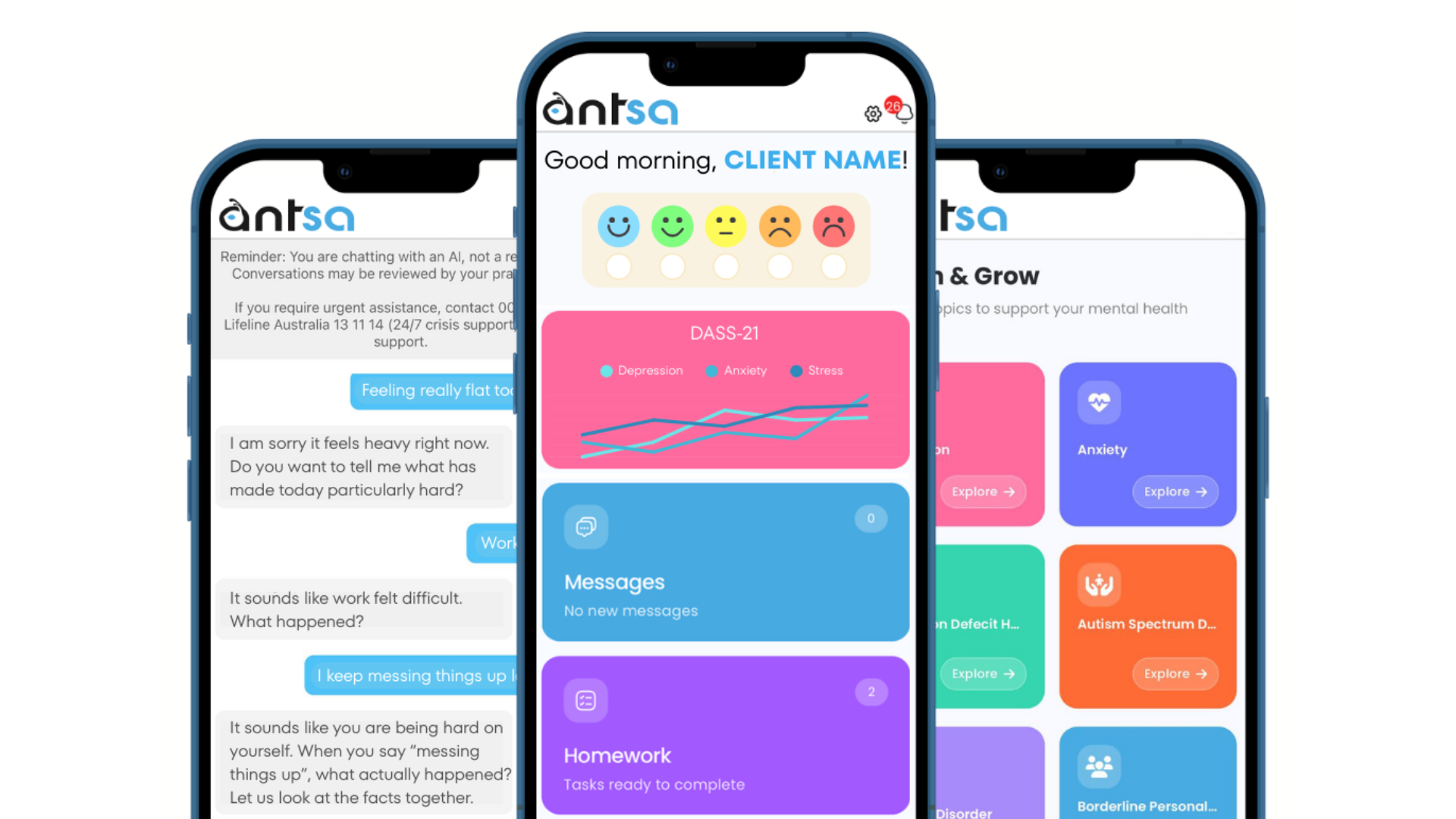
ANTSA is in active use by qualified practitioners across Australia, with ongoing clinician onboarding and expansion into research partnerships and international markets.
Mental health clinicians using the platform to support their clients.
People receiving mental health support whose clinicians use ANTSA between sessions.
Benefit from unified, safe, scalable digital care system.
Better oversight, early intervention, ethical AI
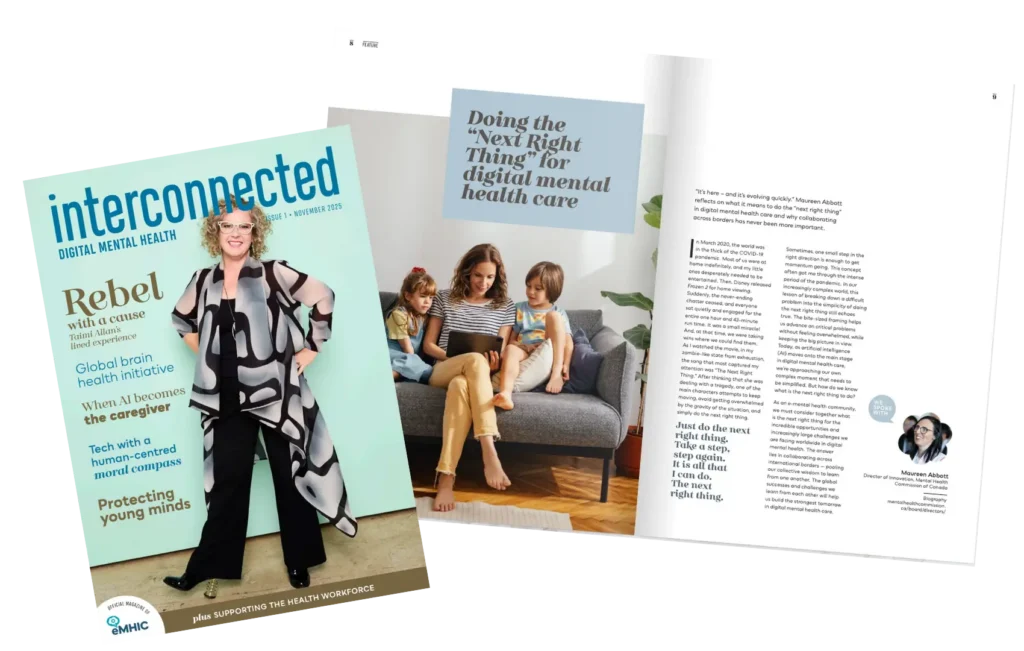
Now accepting submissions of interest for the upcoming issue.
Interconnected is the world’s only digital mental health magazine.
Want to be featured?
Email [email protected]
Between sessions, clinicians have limited visibility of how clients are functioning, relying largely on retrospective self-report at the next appointment. At the same time, unsupervised consumer AI chatbots are entering mental health without clinical oversight, creating real safety and quality risks for vulnerable people. These tools sit entirely outside the clinical relationship. ANTSA is Australia’s first clinician-overseen chatbot, bringing the chatbot back into the clinician’s loop by pairing structured between-session data with ANTSAbot, supervised and assigned by the client’s treating practitioner, so that AI extends care safely rather than replacing the clinician.
ANTSA was founded in 2022 by Sally-Anne McCormack, a Clinical Psychologist, and is grounded in clinical practice and a strong governance, compliance, and regulatory framework. The platform keeps qualified practitioners central to care, with AI features that support rather than replace the clinician. Through its membership of Mental Health Australia, ANTSA is actively engaged in mental health reform discussions, and has met with government ministers on the safe, supervised use of AI in mental health care. ANTSA is also pursuing research partnerships and independent evidence generation to strengthen the platform’s clinical foundation.
ANTSA is a digital mental health platform designed for qualified practitioners. At its core is ANTSAbot, Australia’s first clinician-overseen chatbot, bringing the chatbot back into the clinician’s loop by engaging clients between sessions under the supervision of their treating practitioner rather than operating as a standalone consumer tool. The platform also provides structured between-session data capture, an AI scribe for documentation, telehealth, and clinical workflow tools, all governed by the clinician. This keeps the practitioner central to care while extending support beyond the consulting room, offering a supervised alternative to unsupervised consumer AI.
Australia's first clinician-overseen chatbot, engaging clients between sessions under their practitioner's supervision and assignment rather than operating unsupervised.
Built from the outset to prioritise accountability, transparency, and ethical use of AI in mental health.
Mood tracking, journalling, and assigned activities keep clients engaged between appointments and give clinicians visibility of progress.
Supports session documentation, reducing administrative workload while the clinician remains responsible for the clinical record
Standardised measures and curated resources practitioners can assign to support assessment and client understanding.
Between-session data feeds directly into the client record, supporting informed clinical decision-making.

Three ways to get involved:
Choose the level that fits.