Content Type: Research Article
AI Scribes Gain Traction Among New Zealand GPs Despite Ethical and Legal Concerns
A new University of Otago study has found that AI transcription tools, or “AI scribes,” are already being widely used in New Zealand primary care, particularly by GPs.
Resilient Minds: How Personalized Support Builds Women’s Brain Resilience
Safeguarding youth and adolescents in the age of AI chatbots: a call for best practices
As AI chatbots become increasingly woven into the daily lives of children and adolescents, eMHIC underscores the urgent need for careful implementation and strong safeguards. Research reveals both promising benefits and serious risks these tools pose for young people’s mental
Balancing Risks and Benefits: Clinicians’ Perspectives on the Use of Generative AI Chatbots in Mental Healthcare
A new study explores how mental health clinicians view generative AI chatbots in care. Clinicians see both promise and risk in using AI chatbots, highlighting the need for caution, regulation, and human oversight.
A Double-Edged Sword: How Diverse Communities of Young People Think About the Multifaceted Relationship Between Social Media and Mental Health
The 2024 report “A Double-Edged Sword: How Diverse Communities of Young People Think About the Multifaceted Relationship Between Social Media and Mental Health” offers a clear explanation of social media’s complex role in youth well-being. It details how these platforms
Social Media and Youth Depression: A Causal Link?
A UCSF study reveals a direct, causal link between increased social media use and rising depressive symptoms in preteens. With screen time surging, youth mental health is impacted, highlighting the role of factors like cyberbullying and the urgent need for
Developing Responsible AI for the Mental Health of Young People
Caroline Figueroa’s work at Delft University of Technology focuses on Developing Responsible AI for the Mental Health of Young People. She stresses that for AI to truly benefit adolescents, it must be co-designed directly with them. Her research, including a
First Clinical Trial of AI Therapy Chatbot Shows Promising Mental Health Outcomes
A recent clinical trial by Dartmouth researchers found that Therabot, a generative AI-powered therapy chatbot, significantly reduced symptoms of depression, anxiety, and eating disorders. Participants reported improvements comparable to traditional therapy, highlighting Therabot’s potential to expand access to mental health
Gen Z Found Its Mental Health Language in Therapy and on TikTok. Now They’re Bringing It to Work
Gen Z is bringing the mental health language they’ve learned from therapy and TikTok into the workplace, influencing how organizations talk about wellbeing and support their teams.
At Home Brain Stimulation for Depression Found to Be Safe and Effective
A groundbreaking study from King’s College London reveals that home-based transcranial direct current stimulation (tDCS) could be a game-changer in treating depression. Published in Nature Medicine, the research shows that tDCS is not only safe and effective but may soon
Upcoming Events

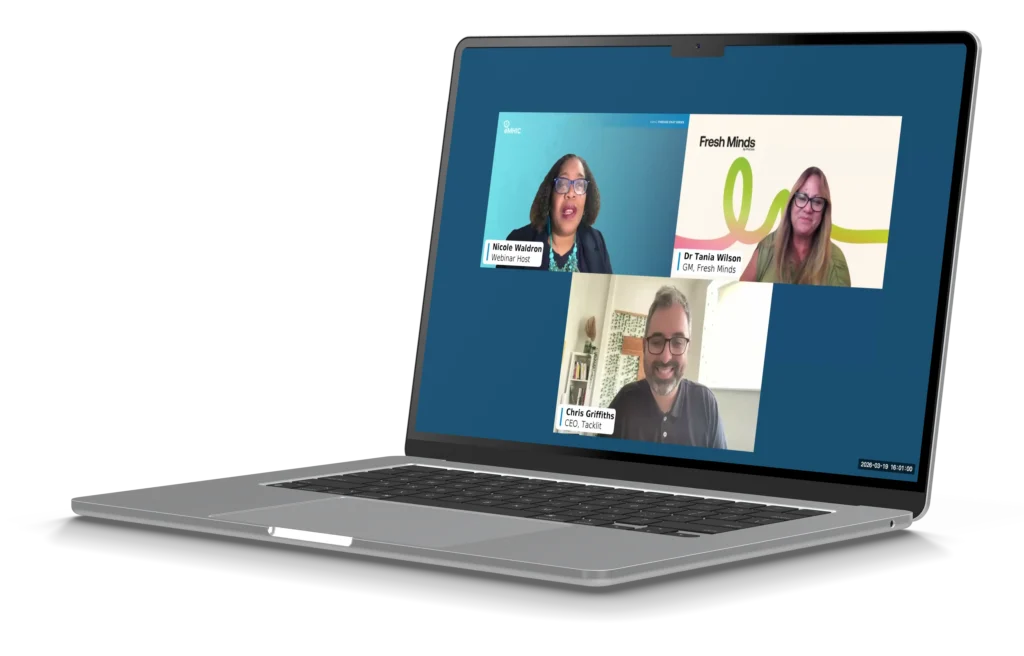
Webinar Replays
Member Login
Our Audience
eMHIC has and audience of 26 member countries (and growing) with thousands of subscribers around the world.
Share your thoughts
Have quality news or resources to share on the eMHIC Knowledge Bank? We’d love to consider publishing them for our global community.